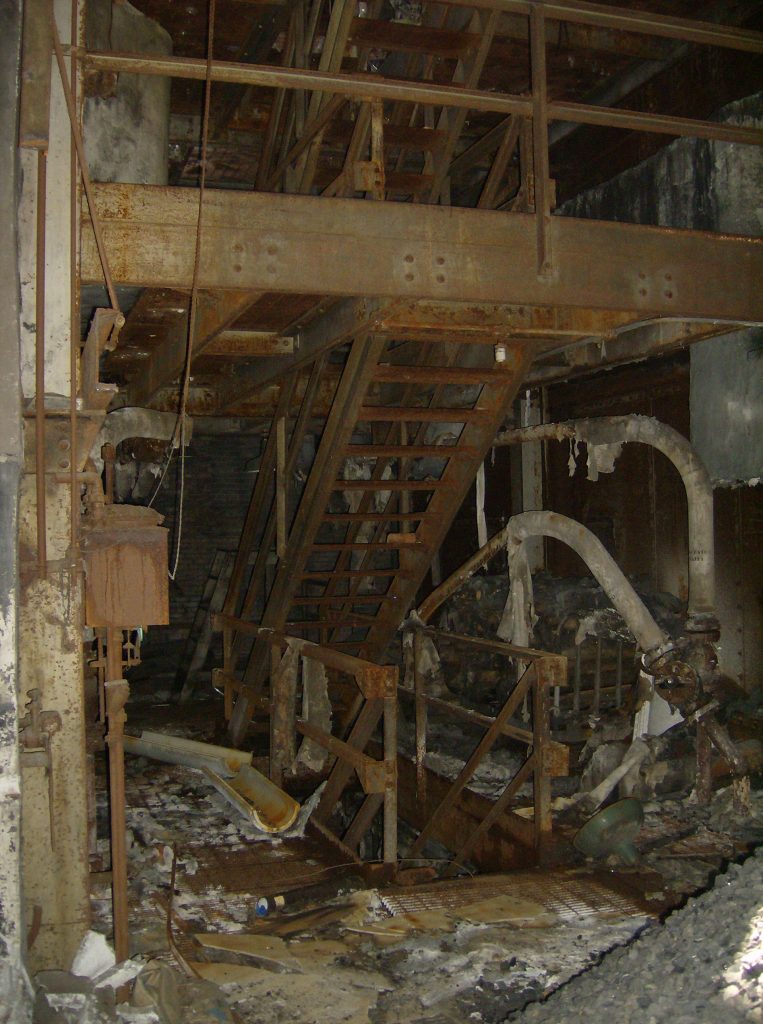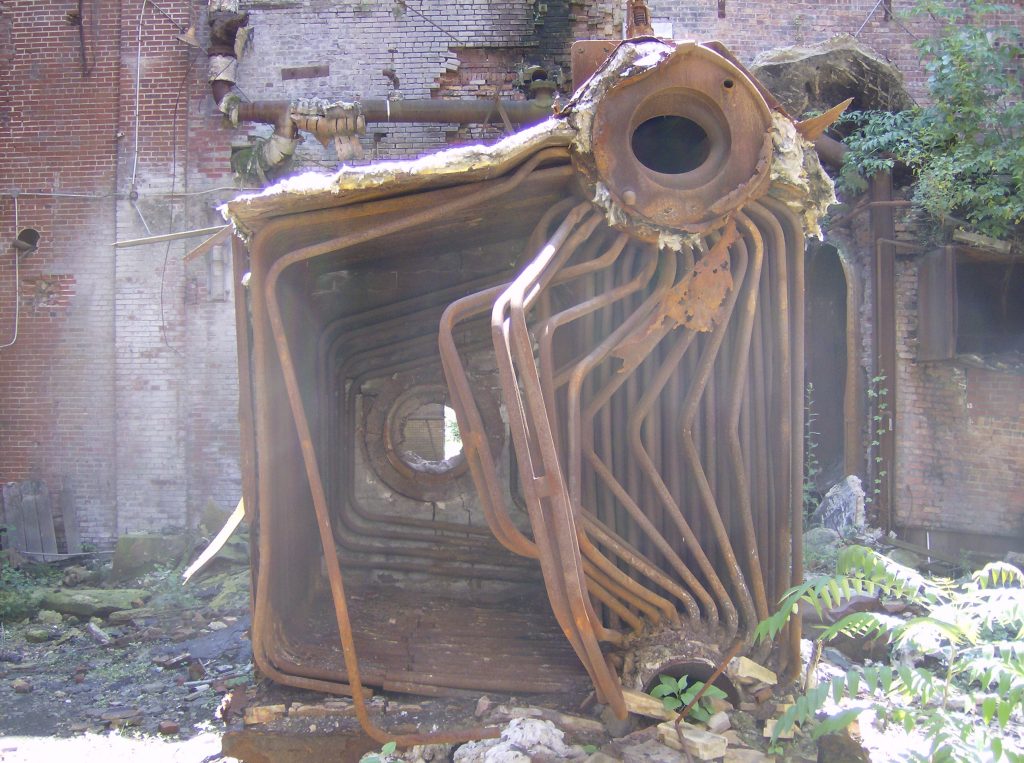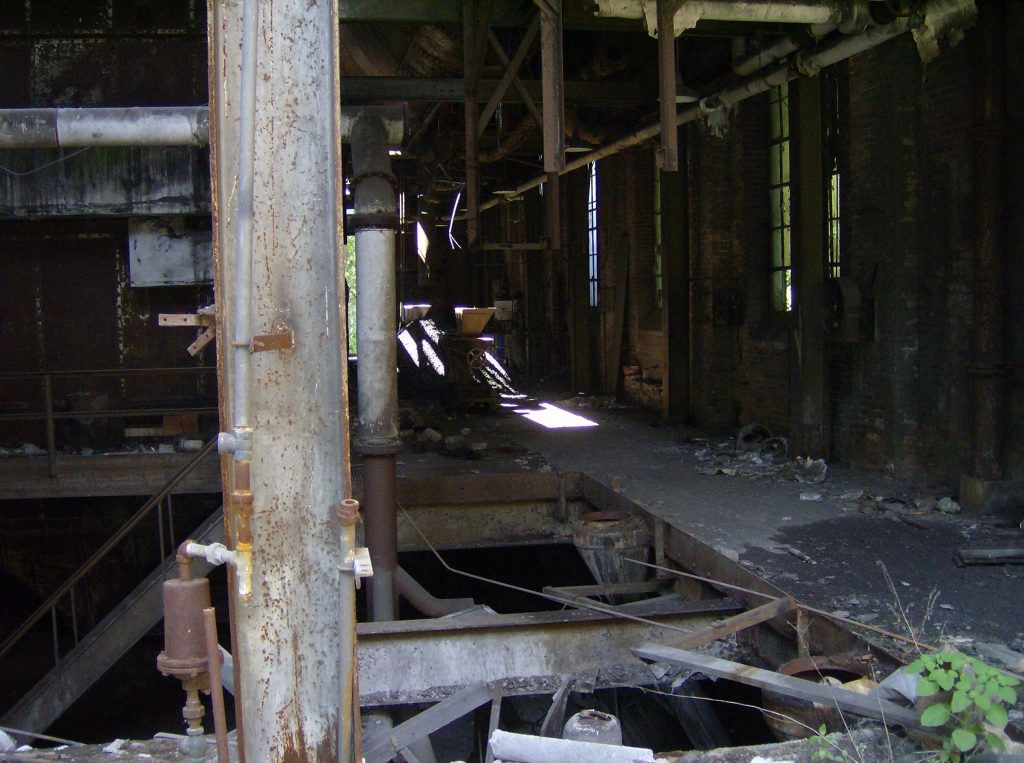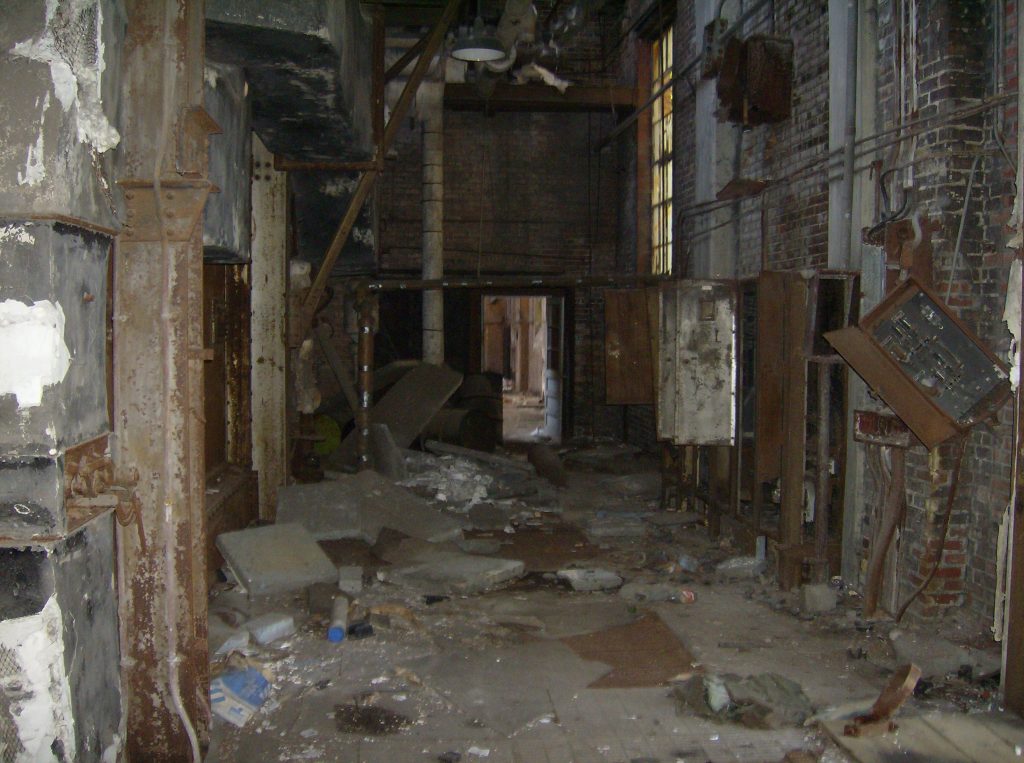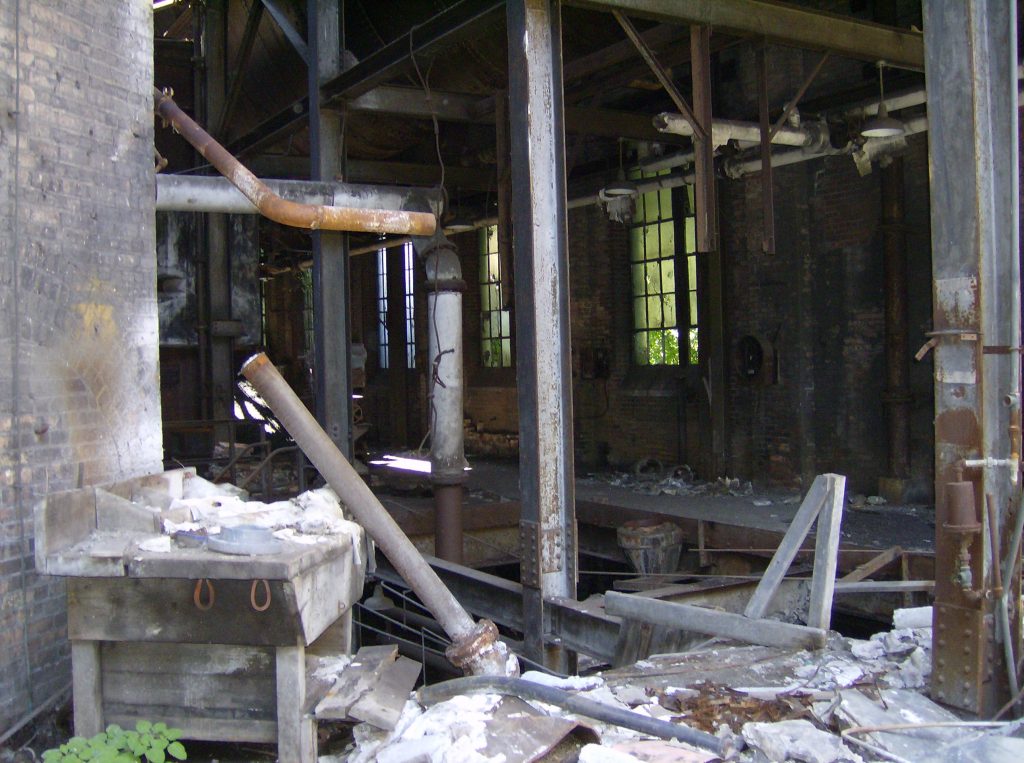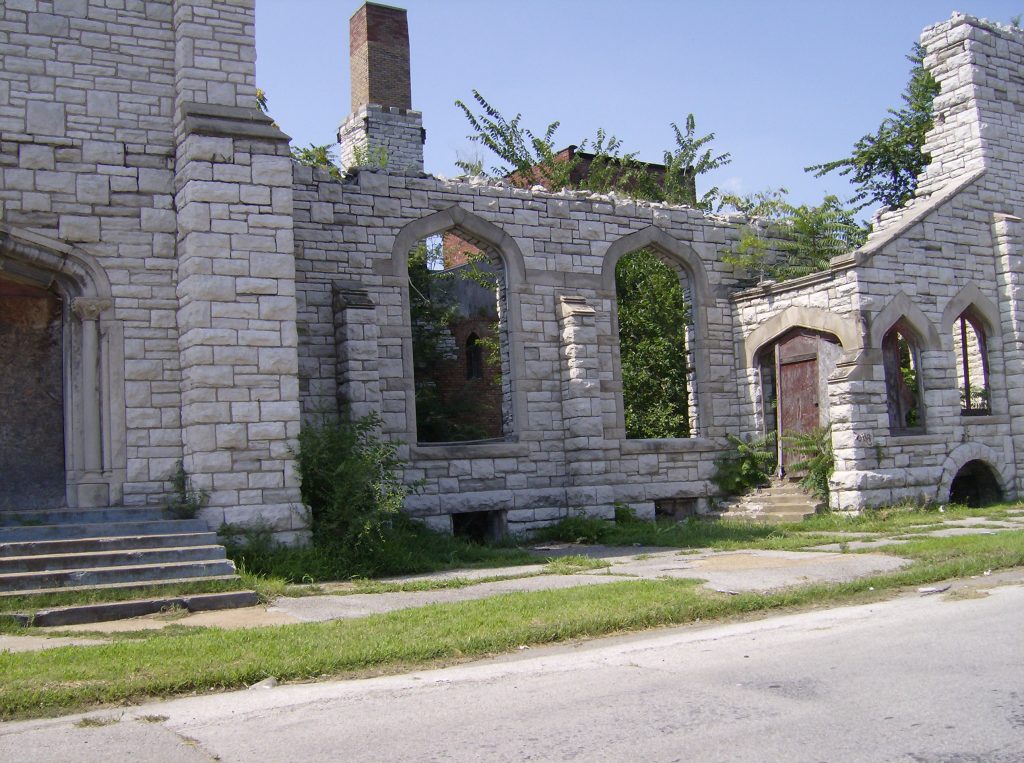
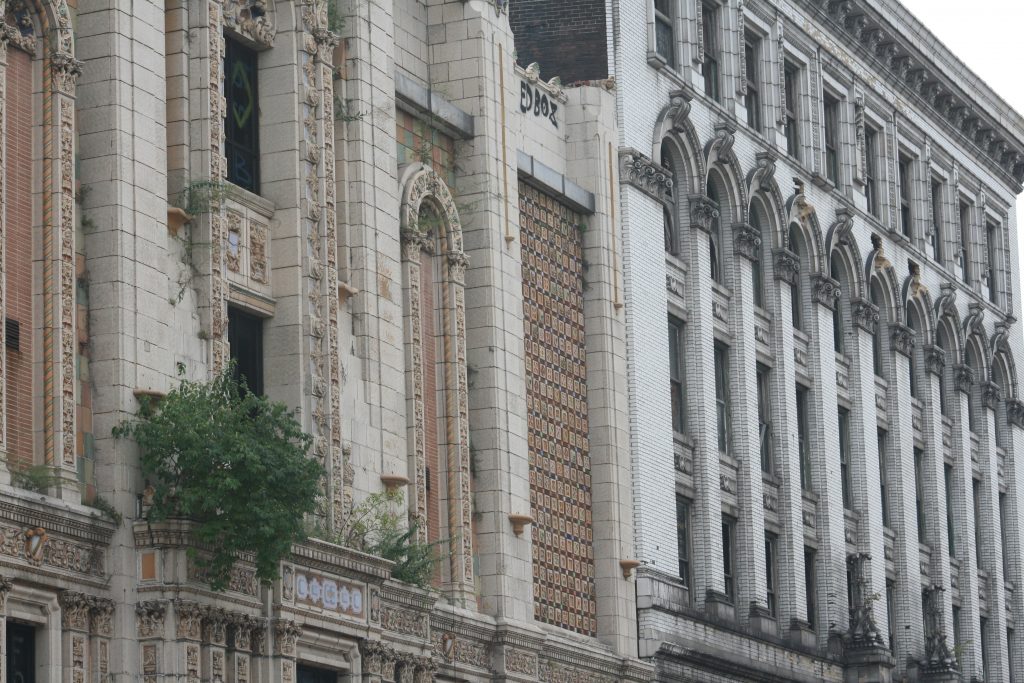
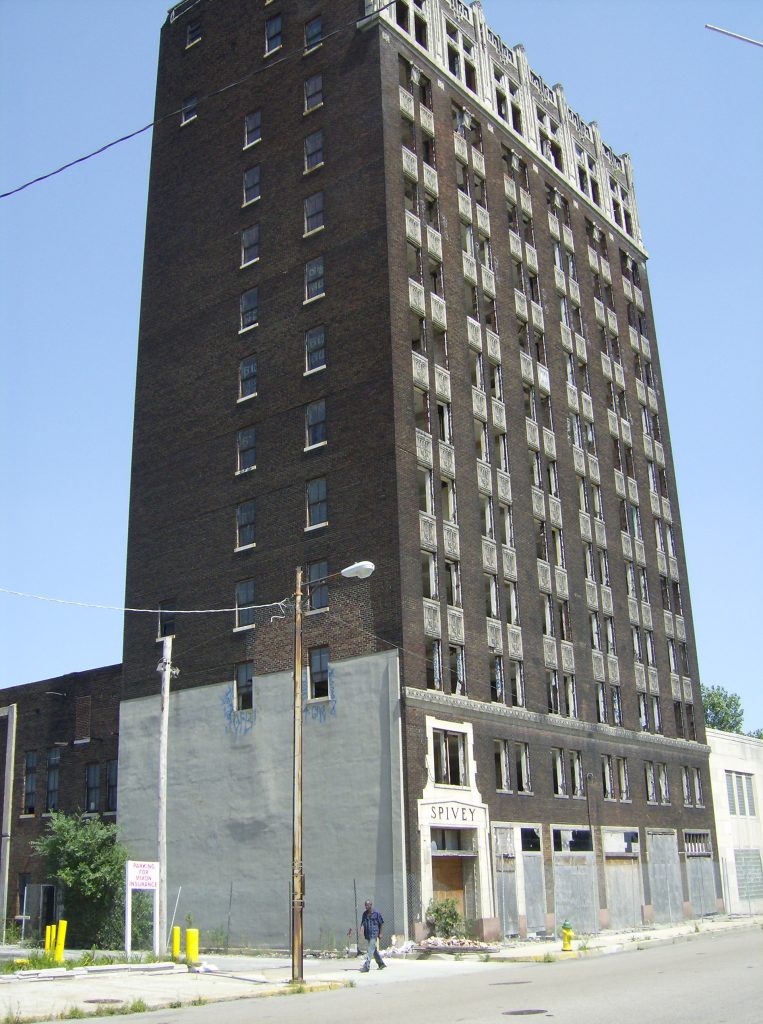
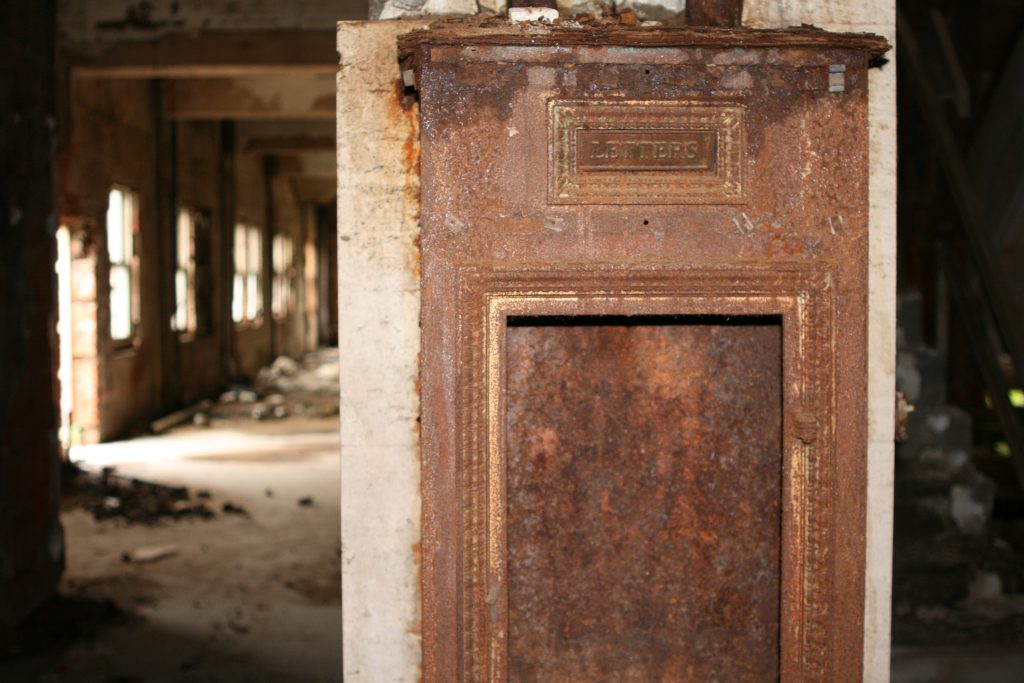
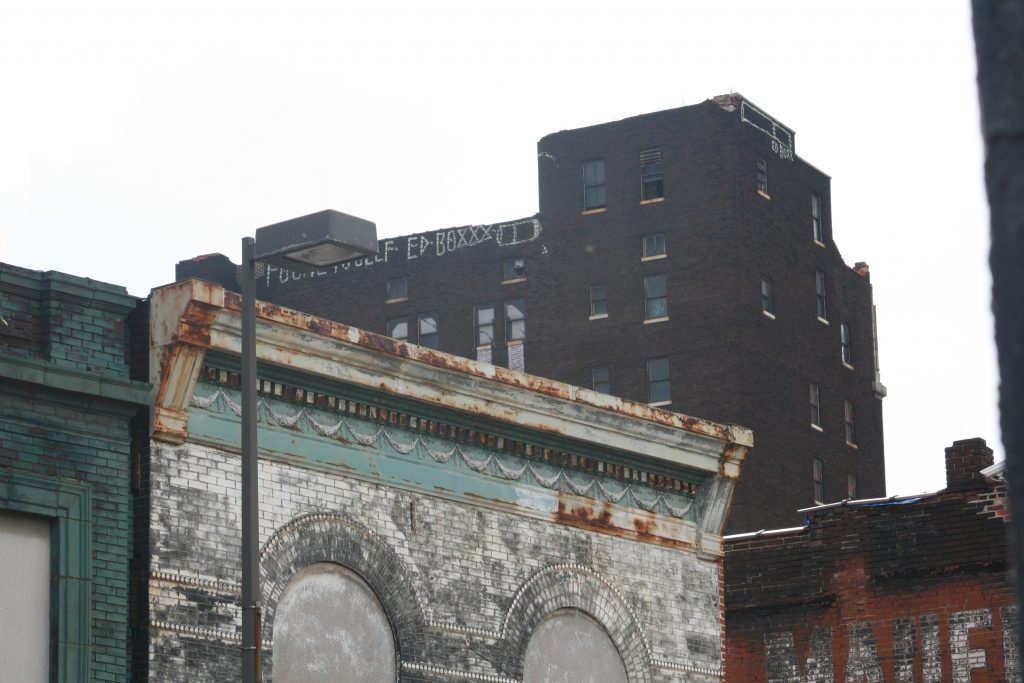
In the 2000s, I explored the industrial ruins of East St. Louis like one explores the ruins of Rome, and I shared my photos in a Facebook album. When my account was pulled in 2015, it seemed the collection was gone forever. Today, though, I took a deep dive into my Google Photos and found a few there.
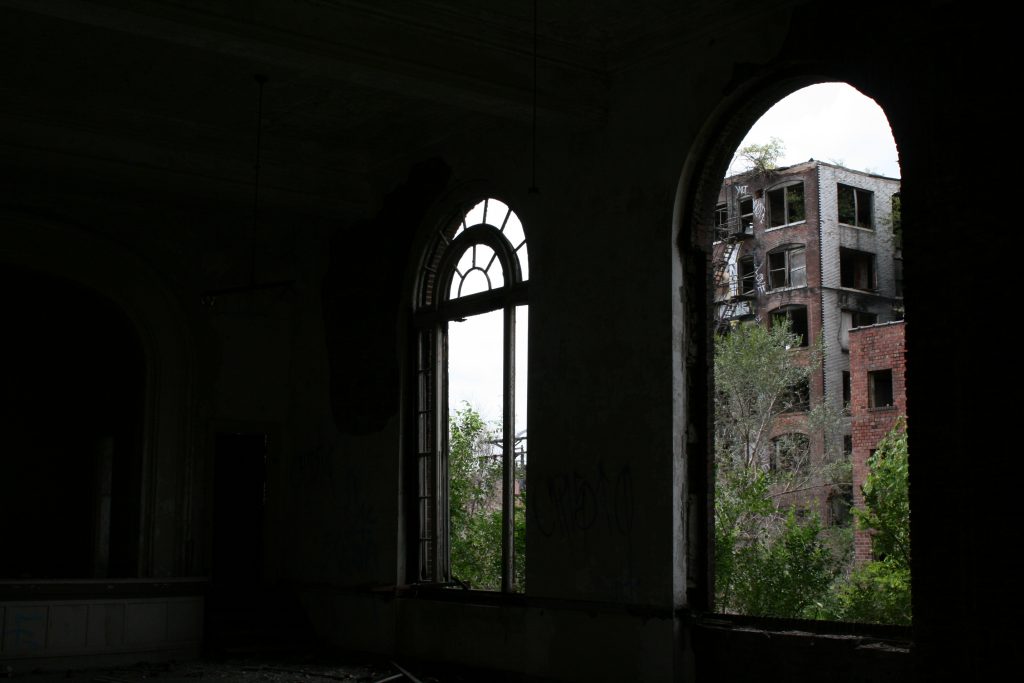
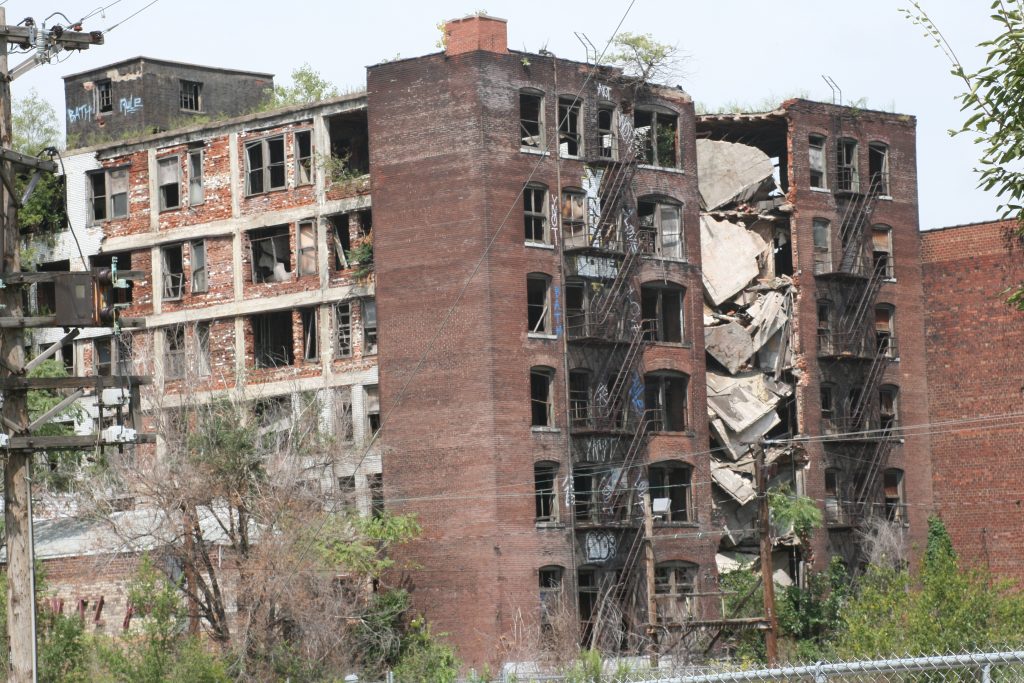
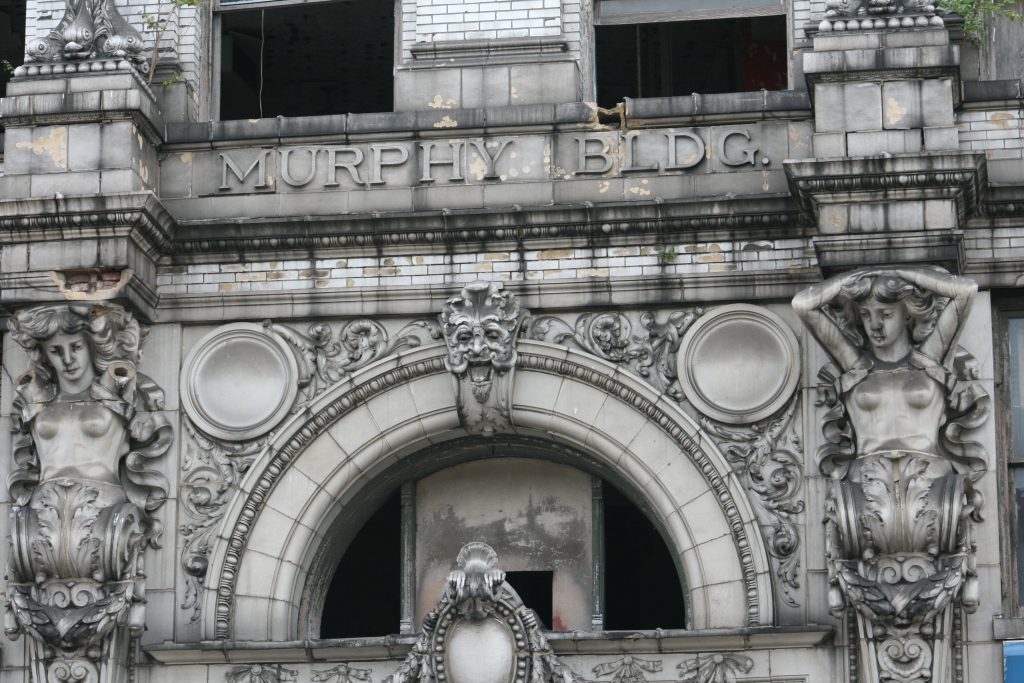
The following story, which is published in Delusions of Grandeur, takes place on the fire escape above.
My buddy Charlie owned a trucking business in East St. Louis and had been interested in my urban exploration photos for some time. He finally asked for a tour, so we met at six a.m. on a Saturday morning and hit the highlights.
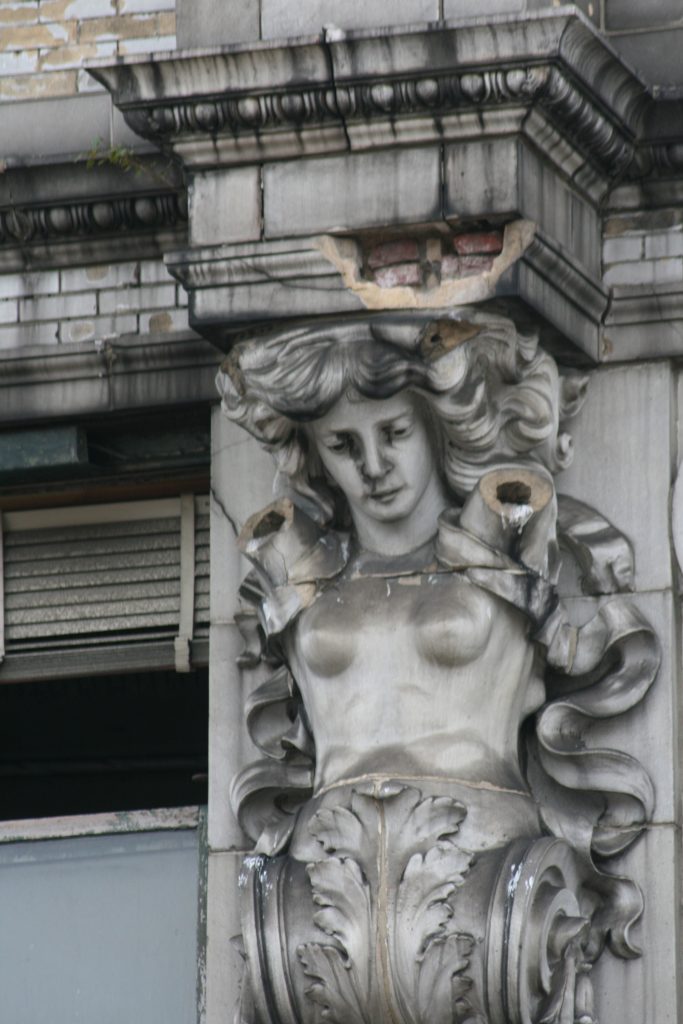
I normally finished with the Murphy Building, a beautiful but partially collapsed masonry structure of about six floors. It was best accessed from the basement, which was ground level in the rear. Flashlights were needed to find your way through the pitch-black maze, over piles of clothing and debris, to the rickety wooden steps to the main lobby.
“And this is as high as we can go because the marble stairs have been stolen,” I’d announce.
Minutes later, I saw Charlie jump out the back window, fifteen feet above the concrete below, and swing onto a rusty old fire escape. “We can go up this way!” he said, as he proceeded to climb.
Well holy shit. This place was shuttered in 1959, and Charlie’s betting his life on a rusty fire escape on a crumbling brick building. I sat in the back window looking at the stairs hanging there three feet away, and I could hear him exclaiming, “Wow, it’s really cool up here!” Meanwhile, I was paralyzed by an inner conflict. The devil on my shoulder was telling me to get up there.
“You’re the expert tour guide! People seek YOU out to show them these ruins, and one of your guests is seeing places you’re too afraid to explore!” while the angel on the other shoulder was saying, “Don’t risk your life to climb that fire escape! What’s worse than dying is becoming a paraplegic! What then?”
The two voices were pretty equally matched. I couldn’t make a decision, and I couldn’t move from the window, even when Charlie swung back in and was ready to go.
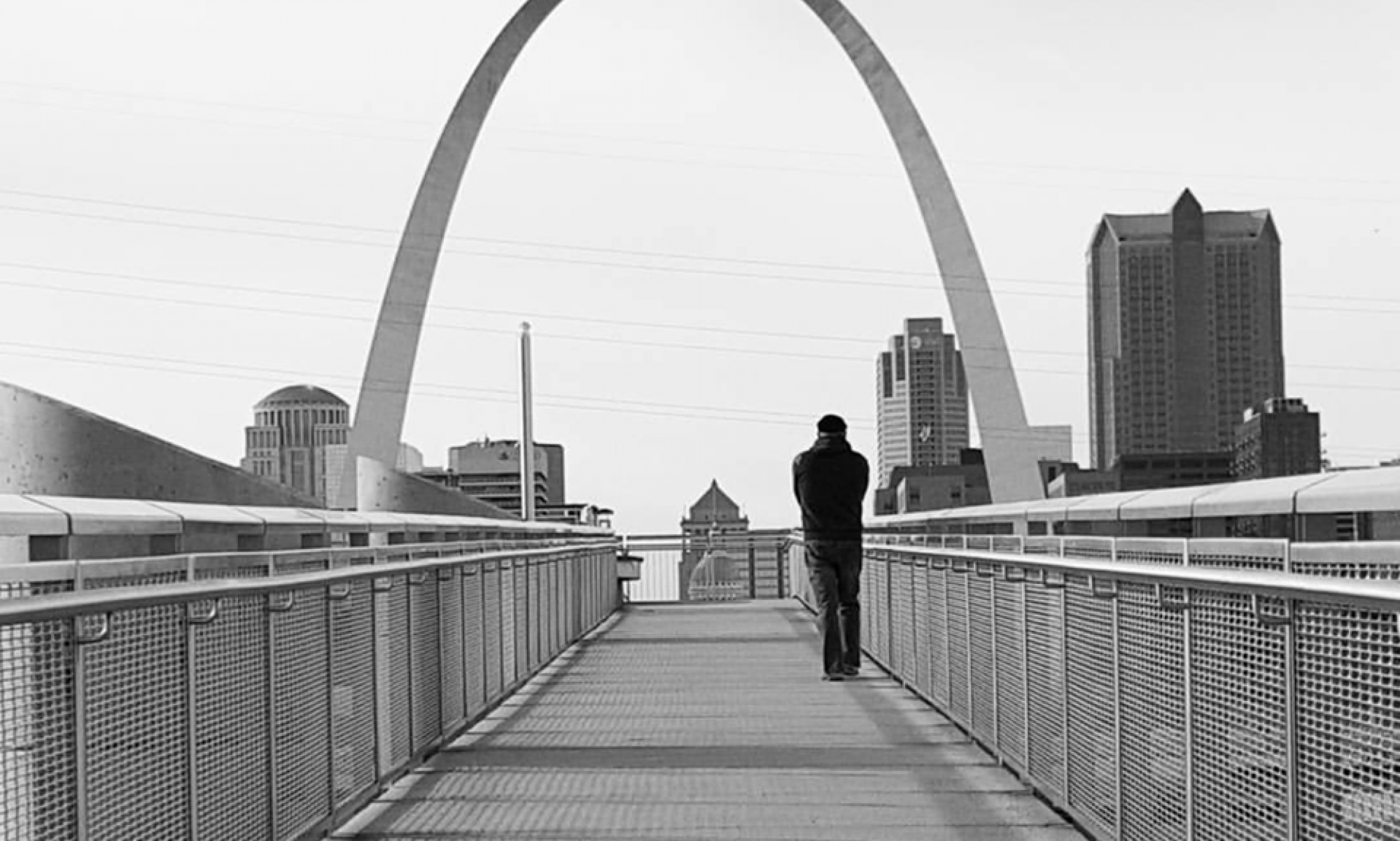
Finally, I decided I couldn’t leave without going up, and it was like a religious experience. It was easily one of the most exhilarating moments of my life, especially looking out over the Gateway Arch, knowing I was up there because I’d overcome my fear.
As I carefully made my way down the fire escape, my friends were cheering me on through the window.
I replied, “Damon would NOT be happy with me right now!” – and at that very moment, I heard Damon’s voice coming from my pocket, “HELLO? HELLO?”
I think my guardian angel called him out of spite.
At some point in the next couple of years, that rusty fire escape crashed to the ground.
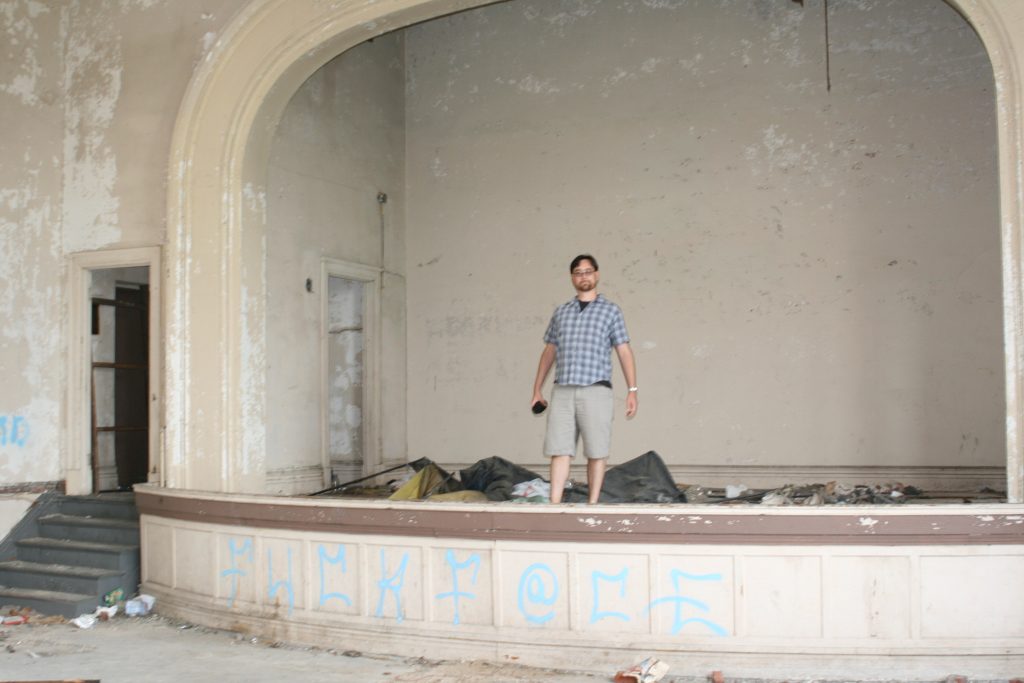
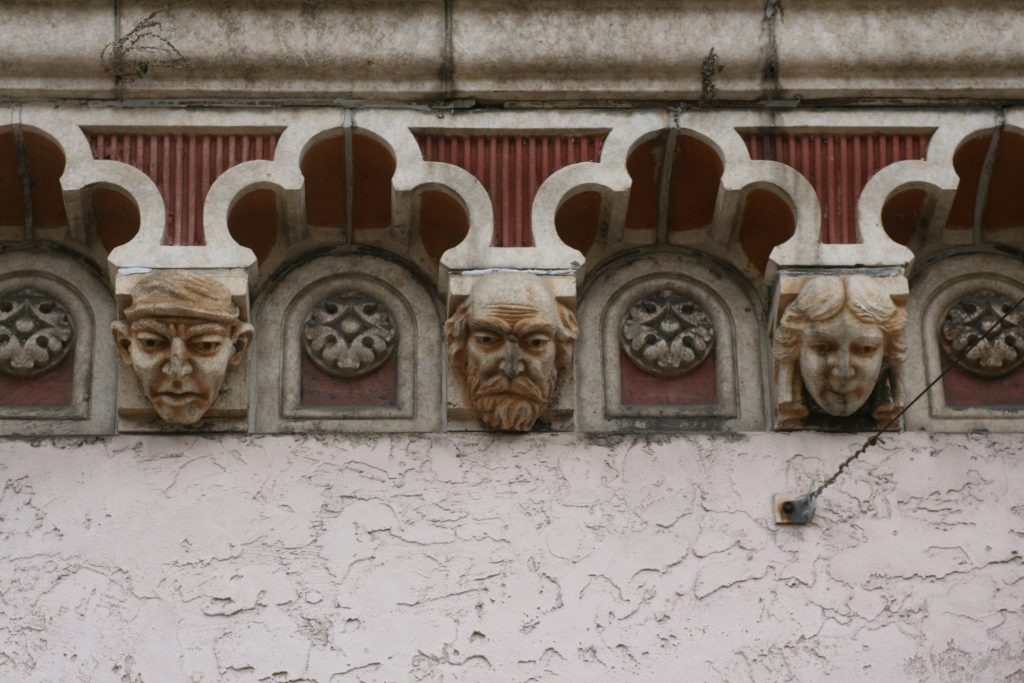
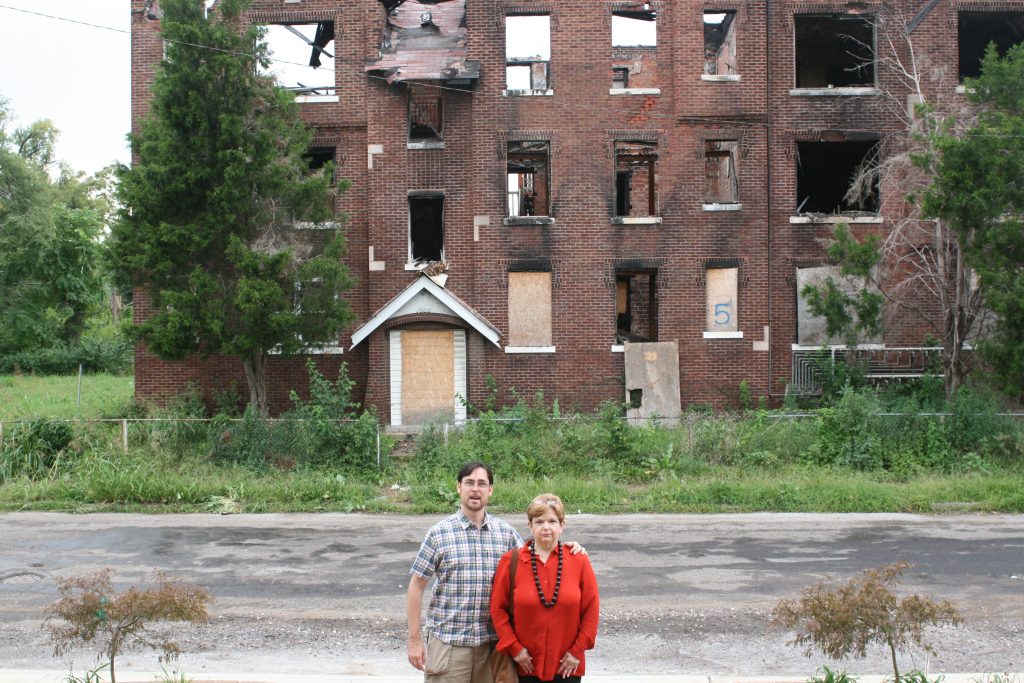
The following is another excerpt from Delusions of Grandeur.
I’ve spent a great deal of time documenting the collection of ruins that make up much of the East St. Louis area. It’s fascinating to see what happens to large masonry structures after fifty years of abandonment. The first couple of times the decay seems static, but after a few seasons your eye begins to measure the steady progression.
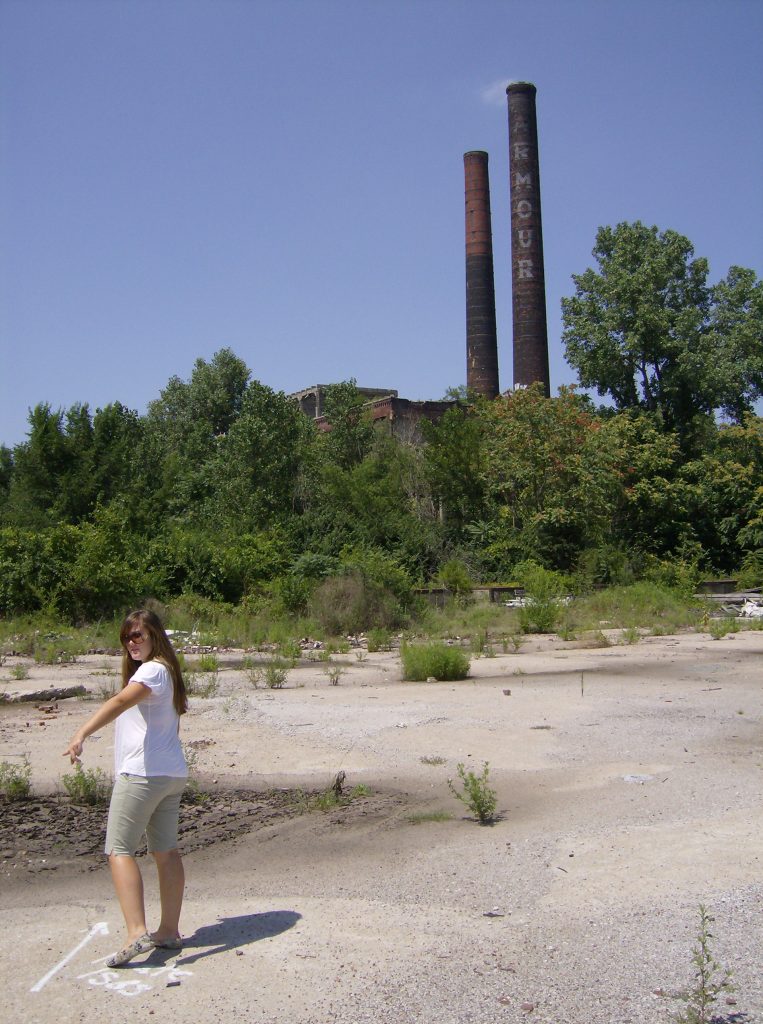
The site urban explorers long found the most intriguing was the Armour Meat Packing Plant, which was the first of East St. Louis’ big three plants to shutter, closing in 1959. Visiting this behemoth was a religious experience for many, with its soaring smokestacks, towering ornate machinery – some circa 1902 – incredible views, and endless areas to discover.
With a few flashlights you could descend into the labyrinth basement complete with oily black stone walls and deep watery pits. You could climb multiple levels, taking in the glazed brickwork and the old slaughter floor complete with a cattle chute, and check out the incredible views of the St. Louis skyline and the Mississippi. One explorer documented his journey to the top of the smokestack, where bricks came loose in his hands and he nearly fell to his death.
The mystique around this place was accentuated because it was difficult to find, and you had to have a lot of street cred to even begin to look. You’d head north through East St. Louis, past the rough old prostitutes strolling Route 3, make a right at nowhere, make a left at nowhere, park along the nameless, overgrown and potholed road surrounded by the remnants of long vacated stockyards. Once on the property you’d trek the long convoluted pathways through thick vegetation, careful not to fall through open manholes, before finally reaching it.
Nature had taken back the site, inside and out. Trees were firmly rooted on the roof, vines climbed through windows, and a giant white owl waited in the rafters.
I’d visited the site regularly for a couple of years before metal scrappers discovered it and removed much of the flooring, and disassembled some of the ornate equipment. On an intellectual level I wondered why the thefts bothered me so much. After all the building had been steadily collapsing on itself for decades, and was well past the point of being converted into a new use. The condition was terminal, and after half a century of isolation, development was finally encroaching with the new I-70 slated to skirt the site. This hidden, mysterious treasure- long a beacon for explorers and thieves, would soon be laid bare as a dangerously accessible, intolerable eyesore on newly visible, valuable property. Its days were numbered, but the dismantling bothered me nonetheless.
After being in California for seven months I was eager to see the ruins. I visited the neighboring Hunter Plant, owned by my buddy Badass Charlie and slated for demolition, several sites in Downtown East St. Louis, and I saved the best for last. Sure enough the scrappers had stripped away even more of the personality, but in light of recent severe weather I was surprised that the structure hadn’t fared too poorly.
I was in the main machine room looking around when my eyes locked with an old black man in an official looking uniform.
“Who told you you could be in here?” he demanded.
I’d always had ready-made replies in the event this would happen, but in that moment I felt like one of the twelve year old kids in Stand By Me. I simply replied, “Nobody. I was just taking photos.”
“Get your crew and get outta here.”
I realized he thought I was a metal scrapper. I was with my friend Roberta, and he followed us closely as we walked the long overgrown road towards the property line. I shared that I knew about the scrappers and also thought it was a shame. He then opened up.
“They’re who I was hopin’ to catch!” he began. “They’re tearing this place apart.”
I’d found a kindred spirit. This man loved this crumbling monstrosity even more than I did. After inquiring further, I was astonished to learn he worked at Armour during its heyday.
“When they said the plant was closing and everyone was let go the boss pulled me in and said they need to keep one guy on as the caretaker, and offered the job to me” he revealed.
In 1959 he watched his coworkers leave for the last time. He watched a solid facility slowly decay until entire sections of the roof crashed in, walls crumbled, supports failed, and people like myself climbed the building with abandon.
I had so many questions for him and asked if he’d speak with me for a piece I’d planned to write.
“I can’t really say nothin’, I’ve gotten in trouble in the past” he said.
He did point to a few areas and told us how many people worked in each. He spoke of all the jobs that were there.
The overgrown lot littered with brush, bricks and debris gave way to the blinding white pavement of the brand new access road. We were off the property. The old man with gray stubble, one blind eye and a sharp, pressed uniform had done his job.
A few years back I had a dream that after a storm I went to check on the plant. As I approached I heard a snap, like a lone firecracker, then watched as the entire structure collapsed in slow motion before me, a spectacular sight, so vivid with the smokestacks splitting and a fire escape landing just feet from my body. That would have been a demise worthy of such a structure. Nestled in quiet vegetation, and in the company of someone who loved it.
Just before we got in the car, the caretaker pointed to a nearby dirt pile and said,
“That’s where the new highway’s comin’.”
All of us understood what that meant.
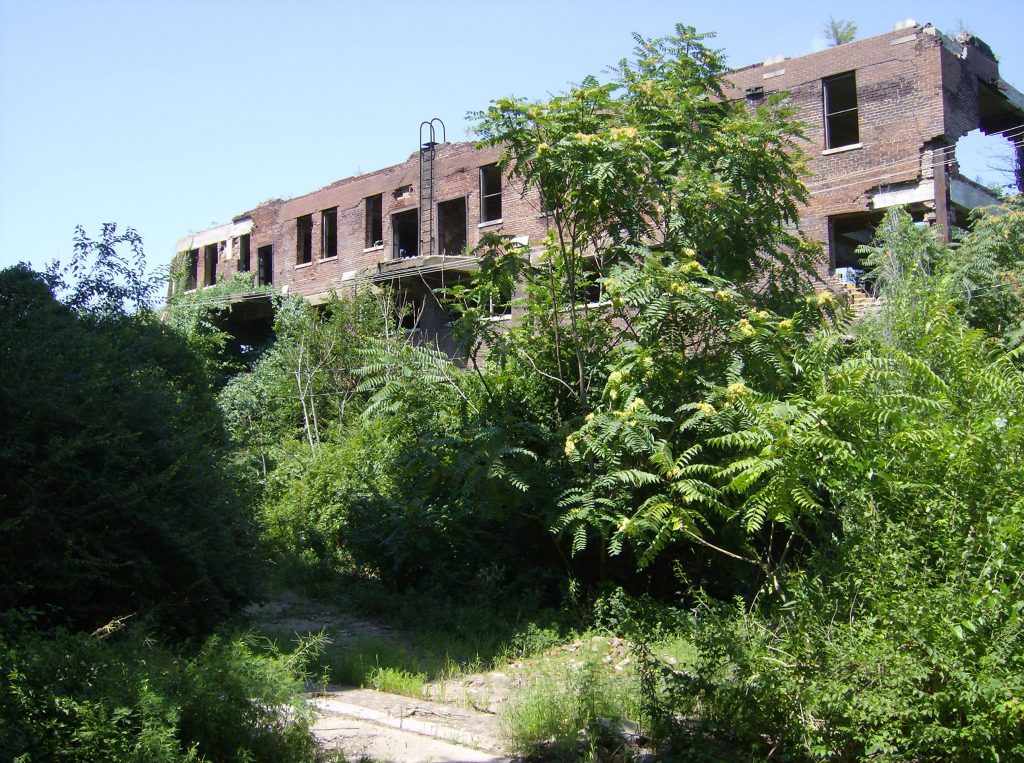
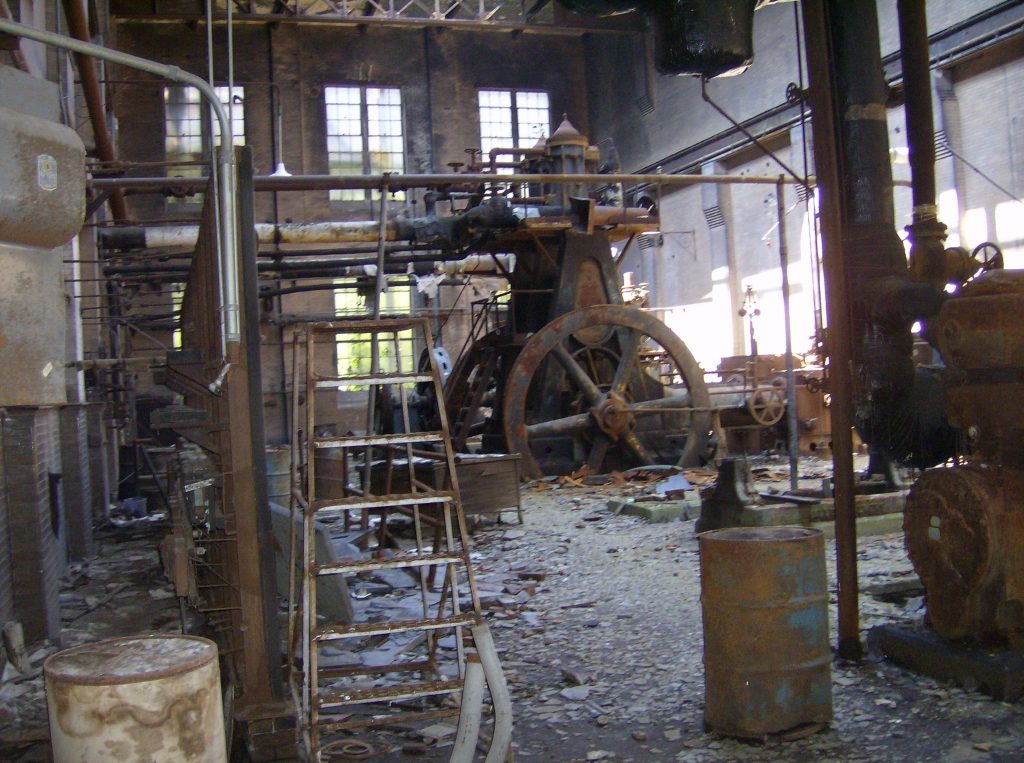
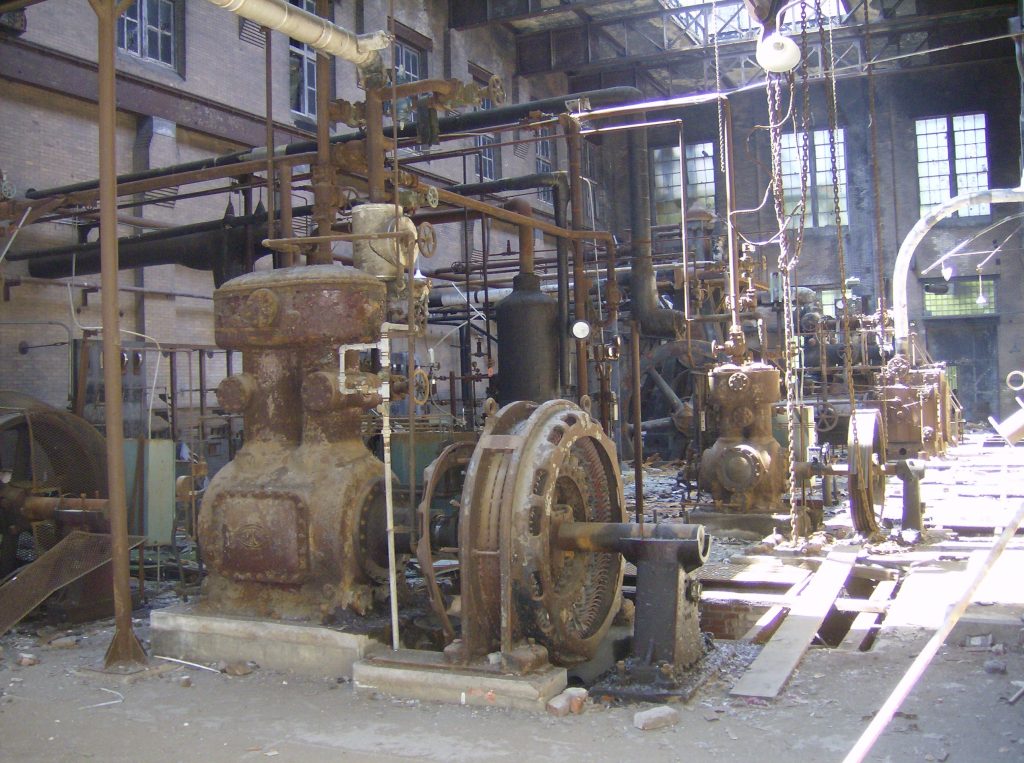
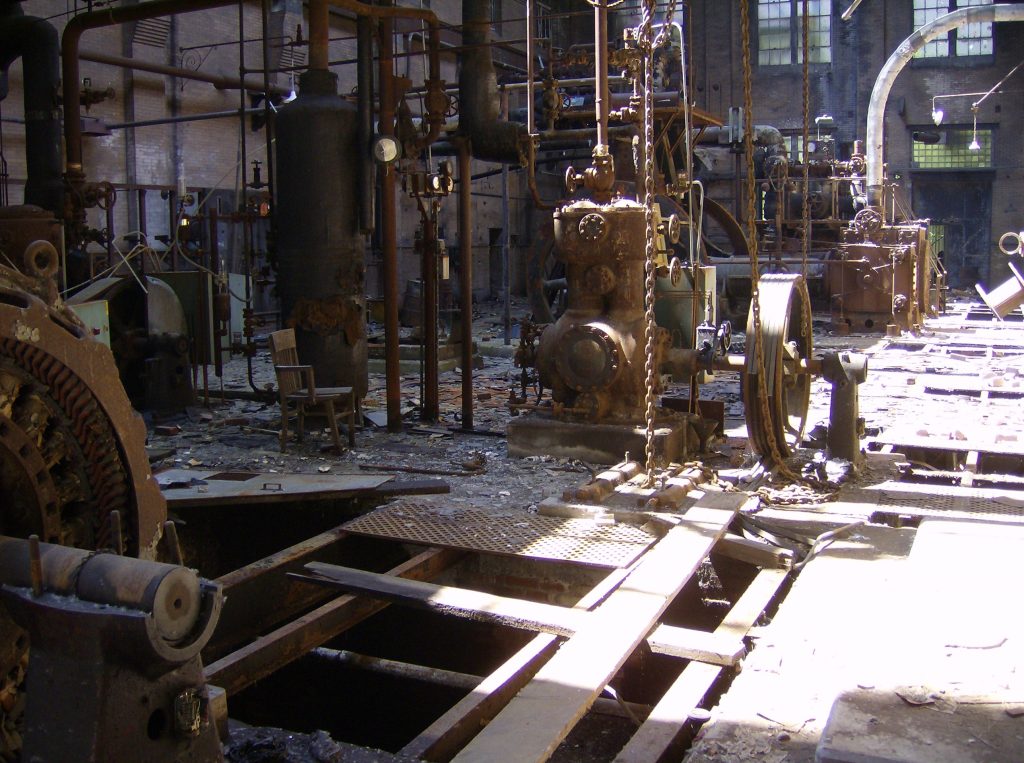
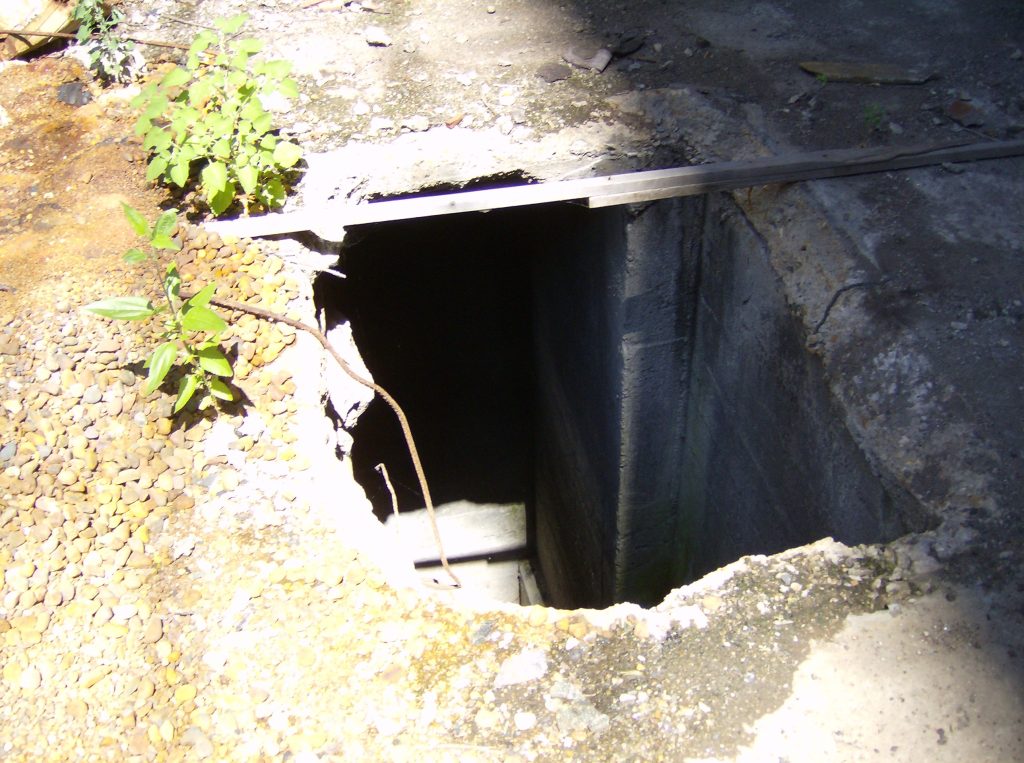
Watch your step. Armour Plant. East St. Louis (National City), Illinois. Demolished.